

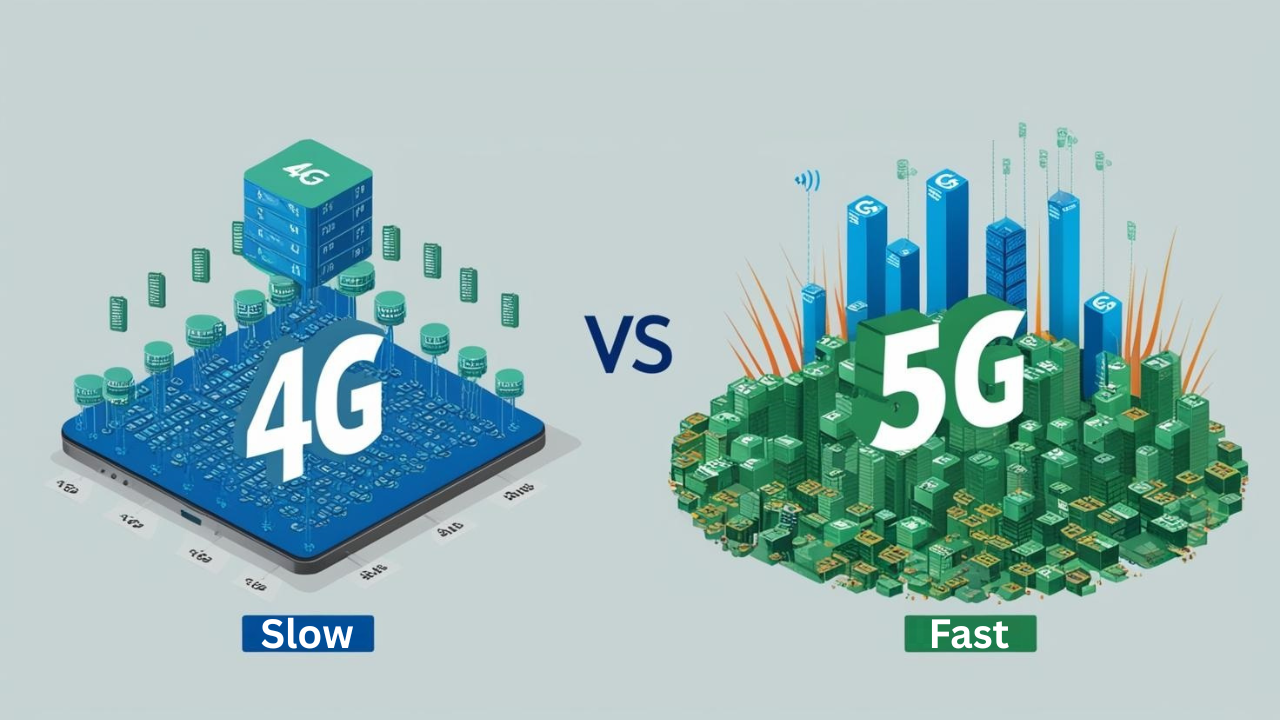
Mobile technology has rocketed from 4G to 5G changing the way we connect and communicate, the time we spend waiting for data to download in 4G is now a thing and in 5G, we enjoy lightning fast speed, low latency, and proper connectivity. These upgrades drive smart cities, high levels of gaming, and IoT devices. It is therefore imperative that one understands the basic differences between 4G and 5G in the modern day world.
In this guide, we will address the comparison of these technologies according to those insights of the experts and actual contexts.
What Are 4G and 5G Technologies?
4G Technology
4G, fourth-generation mobile technology, was launched towards the end of the 2000s. It was a great leap from 3G in that it provided greater data speeds and better connectivity. Key features include:
- All-IP Networks: Shifted from circuit-switched to packet-switched systems, improving the efficiency of data transmission.
- Higher Bandwidth: Allowed high definition video streaming and fostered the development of mobile applications.
- Technologies Used: To begin with, Long Term Evolution (LTE) and Mobile WiMAX.
These developments made it possible for the emergence of smartphones and mobile internet usage.
5G Technology
The 5th generation of mobile networks, 5G, was deployed in 2019. It offers substantial improvements over 4G:
- Enhanced Speed: Up to 20 Gbps theoretically, hence significantly reducing download times.
- Low Latency: Latency as low as one millisecond which is essential for real-time applications such as autonomous cars and remote surgeries.
- Massive Connectivity: Can support 1 million devices per square kilometer supporting the Internet of Things (IoT).
The industry is set to be disrupted with 5G capabilities by allowing sophisticated applications and services.
In summary, 4G was a precursor to mobile broadband while 5G adds to it, providing enhanced speeds and reduced latency as well as increased connectivity to cater to the needs of the modern technology.
Speed and Performance: Key Differences of 4G and 5G
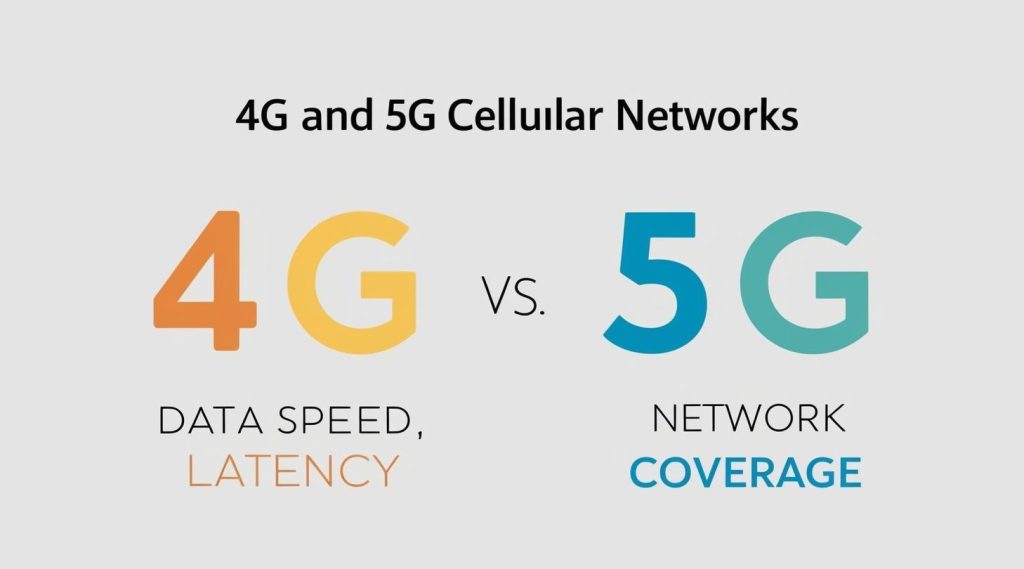
The shift from 4G to 5G is a great stride in mobile-networking capabilities specifically in terms of speed and performance.
Speed
- 4G: Provides theoretical peak download speeds of 100 Mbps, while contemporary figures are given as 20–50Mbps.
- 5G: Delivers the theoretical peak download speeds 20 Gbps, whereas in reality speeds these range from 100 Mbps to 1 Gbps depending upon network conditions.
This massive jump in speed allows for faster downloading, smooth streaming, and is for data-intensive applications such as 8K video and virtual reality.
Latency
- 4G: Normally it has latency ranging from 30–50 milliseconds, which is quite noticeable in real-time applications.
- 5G: Once latency reaches as minimal as 1/1000 of a second, making the communication almost immediate, which is necessary for programs such as autonomous cars or remote surgeries.
Network Capacity
- 4G: Provides a limited number of devices per square kilometer and there can result in network congestion in densely populated areas.
- 5G: Built to accommodate a maximum of 1 million devices per square kilometer, hence making the connection stable even in congested regions.
Summarily, 5G performs far better than 4G in terms of speed, latency and capacity, leading to more progressive technologies and better mobiles.
The Impact on Connectivity: 4G vs. 5G in Everyday Life
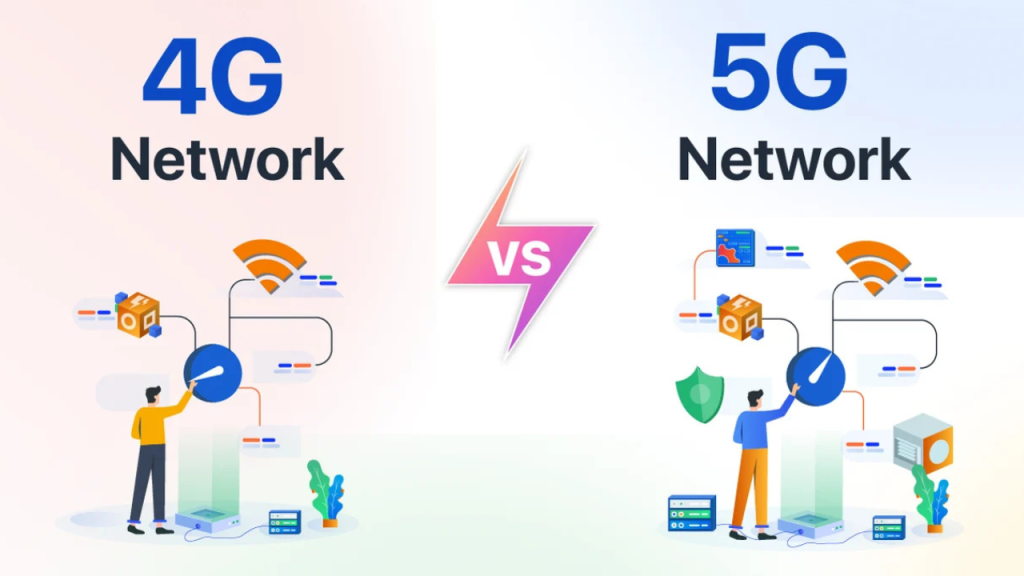
The move from 4G to 5G is changing the way we connect and relate in day to day lives.
4G: Reliable but Limited
4G offered faster mobile Internet which made it easy to have excellent smooth streaming of video, surfing of social media, and usage of mobile apps. However, in conditions of overcrowding or in cases of peak hours, users often endure slowdown and buffering. For example, the connection of the commuters on trains facing unreliable connections are as a result of the infrastructure and signal interference.
5G: A New Era of Connectivity
Compared to 5G, the 5G offers substantially improved speeds, extremely low latency, and a higher number of device connections at a time. This development makes it possible to easily conduct video calls, do instant downloading, and enable new technologies such as autonomous vehicles, smart cities . Everyday, this translates to better connections including even crowded areas and opportunities for advancement in healthcare, education and transport.
In conclusion, although 4G provides mobile connectivity, 5G supports and increases these and provides a more robust and flexible network experience compatible with life in the modern world.
Future Implications: Embracing the Differences of 4G and 5G Technologies
The migration from 4G to 5G is changing our digital world and providing transformative and life changing benefits to multiple industry players.
4G: Foundation for Mobile Connectivity
4G technology changed the world of mobile internet by increasing data speed and supporting applications such as video streaming and mobile games. It paved the way for the proliferation of smartphones and mobile applications which have improved communication and information access in the world.
5G: Catalyst for Innovation
With 5G, extreme latency is lower, there is higher bandwidth, and many devices can be connected at the same time. These features are essential for the development of autonomous cars, remote healthcare, and intelligible cities. For example, low latency of 5G is necessary for real-time applications such as remote surgeries and autonomous automotive travel.
Economic and Industrial Impact
The incorporation of 5G is likely to propound substantial economic growth. In the automotive industry alone, digital technologies representing 5G will add about €573 billion to the global GDP by 2030 . Fields such as manufacturing, logistics, as well as Healthcare will enjoy increased productivity and innovations that are boosted by 5G capabilities.
Whereas, 4G ushered the era of mobile broadband, 5G is destined to lead the next wave of technology innovations. Admissions of these sorts of differences between these technologies are highly important as a way of making the best use of their power in shaping the connected and efficient future.
Final Word
Knowing the differences between 4G and 5G will help one cope in a rapidly changing digital world. Whereas 4G provided a basis for mobile inter-connectivity, 5G is driving the future with increased speeds, decreased latency, and intelligent technology. It affects everything from communications on a daily basis to industry innovation. As 5G is being rolled out, adopting the benefits of 5G will help individuals and companies to be ahead. Choose wisely, keep abreast of developments, prepare for the next mobile technology advance.
Read More: Decoding Phone Performance: How Much RAM Do You Need?
